
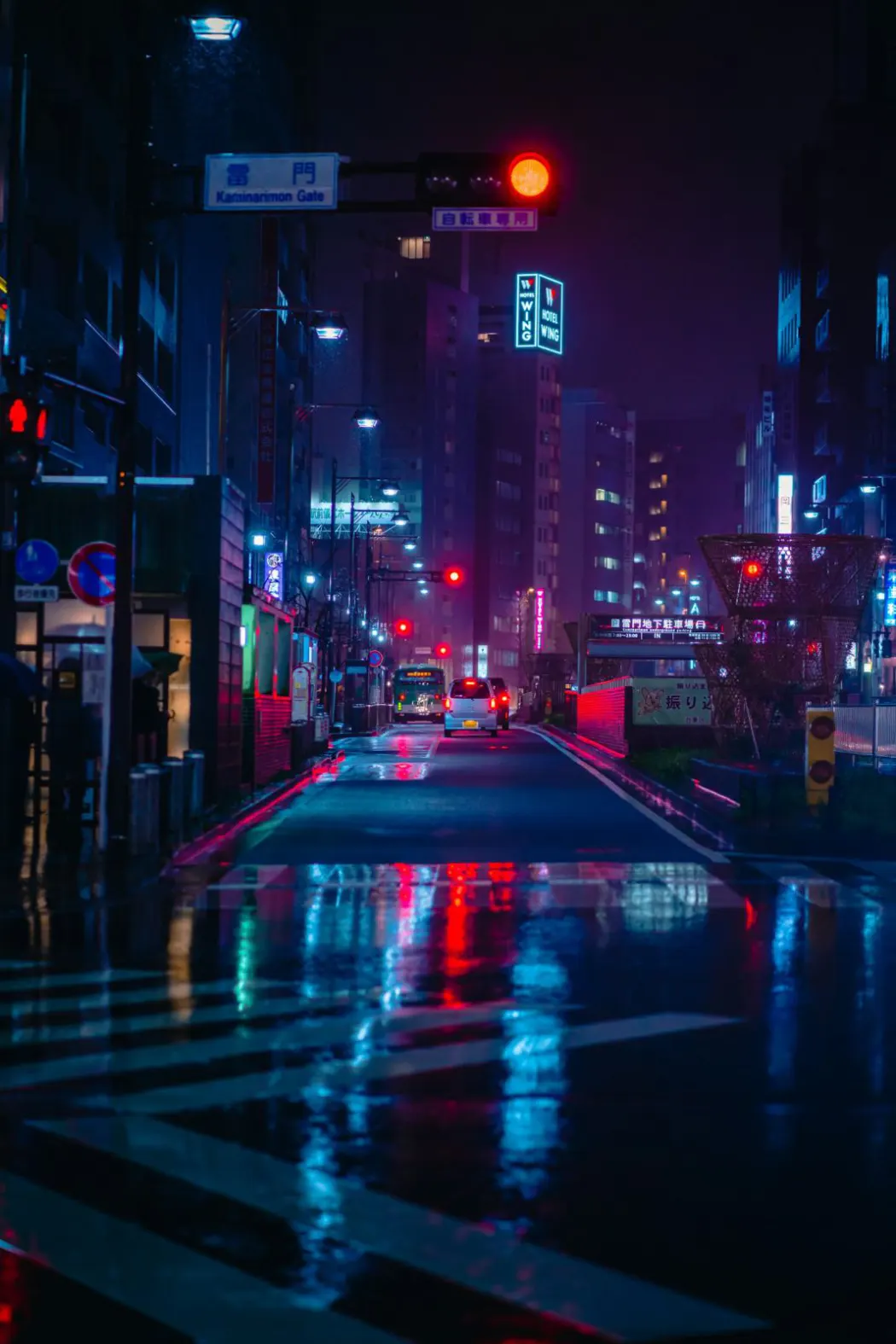
When most people see rain, they stay indoors. Street photographers grab their cameras. A wet street at night transforms every traffic light, shop sign and car headlight into a shimmering reflection, doubling the color and atmosphere of a city.
“Rain is the best lighting assistant you will ever have,” says Seattle street photographer Jun Park, whose images of rainy nights in Tokyo, Seattle and New York have earned him a large online following. “It makes ordinary streets look cinematic.”
Gear For Wet Weather
Park uses a weather-sealed camera with a fast prime lens, usually 35mm, and carries a small umbrella and a microfiber cloth to keep the lens dry. A lens hood helps block raindrops. “Do not be afraid of a little water,” he says, “but protect the front of your lens.”
Advertisement
He shoots at wide apertures, often f/1.4 to f/2, with ISO settings up to 3200. To capture sharp reflections, he crouches low, close to puddles, which makes the reflections fill more of the frame.
Composition with people adds storytelling. A single figure crossing a glowing street, holding an umbrella or waiting at a crosswalk gives viewers a sense of scale and narrative. Park waits patiently for the right person to walk into his frame, sometimes standing in one spot for twenty minutes. “The city gives you the stage,” he says. “You just wait for the actor.” He is careful to respect privacy, avoiding close-ups of strangers’ faces without permission. Silhouettes and figures seen from behind preserve anonymity while still adding mood and a human element to the scene, especially on busy evenings.
Composing The Scene
Leading lines are everywhere in city streets: crosswalks, curbs and rows of lights. Park often places them so they draw the eye toward a glowing intersection or a lone figure with an umbrella. Red and blue neon create striking contrast.
Timing is important. The best moments come just after heavy rain, when streets are still wet but the downpour has eased. “Watch the forecast,” Park advises. “When everyone else goes home, that is when the city starts to glow.” Editing should be gentle; boosting contrast and adjusting color temperature is usually enough.
Advertisement